Webmaster, Derbyshire VCH Trust

The price of coal

This blog takes a very brief look at the ‘price of coal’, particularly as highlighted through a simple postcard image of a 1938 of a Derbyshire well-dressing.

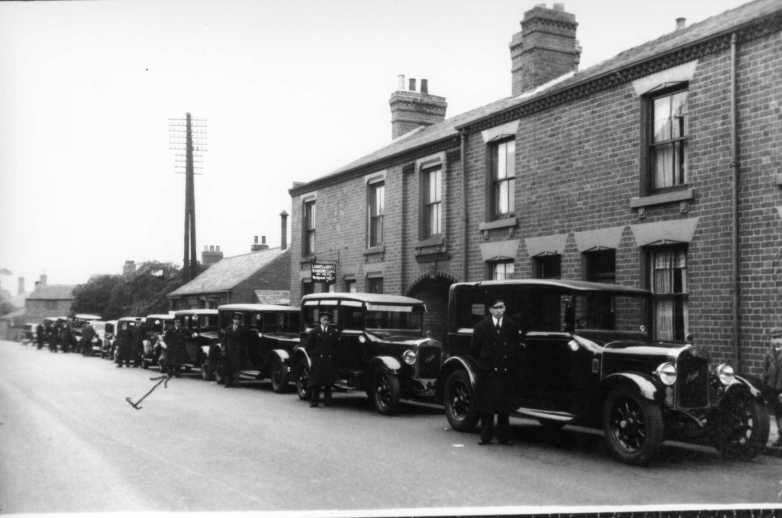
It’s an image of a Barlow well-dressing of 1938, bringing home the terrible price paid in the May 1938 Markham Colliery disaster, when 79 lives were lost after an underground explosion.  The previous year nine lives at had been lost in an explosion at the same colliery – our second photograph shows a line of hearses assembled on Ringwood Road at Brimington ready for the funerals of the some of the victims of that year’s disaster (courtesy the late Alan Wetton and Brimington and Tapton Local History Group).
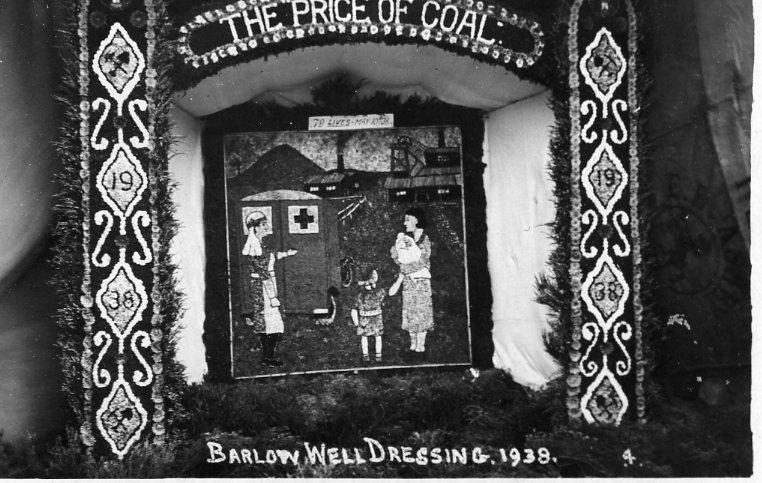
This post card of a 1938 well-dressing at Barlow would have been a poignant reminder of the Markham colliery disaster of that year.
A sad scene at Ringwood Road, Brimington. Hearses wait to take part in the 1937 Markham Colliery disaster funerals.

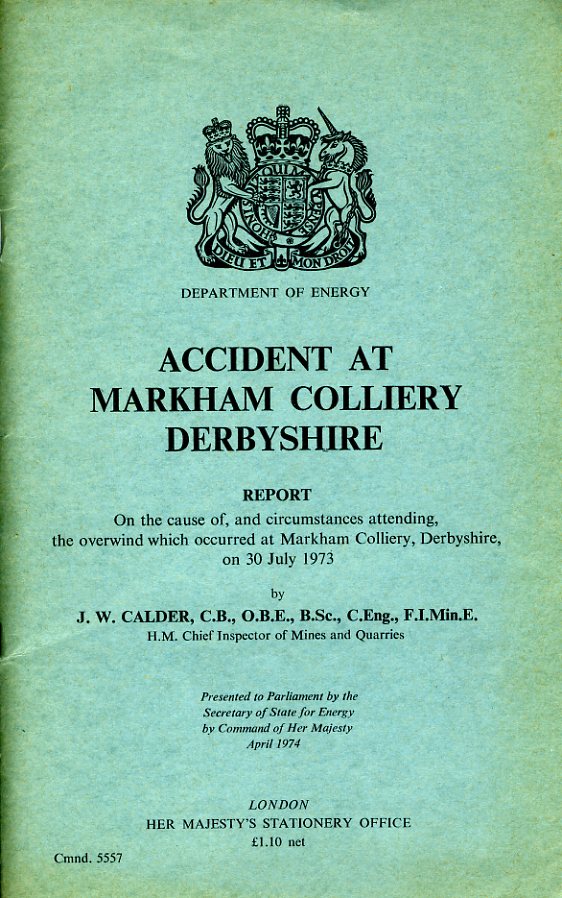
Many local people will still remember the 1973 disaster, also at Markham colliery, after a critical component in the cage winding gear failed. The descending double deck cage carrying 29 men crashed on wooden baulks at the pit bottom with the result that 18 men died and the remaining 11 were seriously injured.

Victoria County History uses both contemporary newspaper reports and official publications to document these disasters in our history of local communities. But we don’t replace work done by local people to document the price of coal in their own communities.

There were, of course, other serious disasters in the coalfields throughout the country and more locally, including Creswell (1950 – 20 men killed) and Glapwell (1933 – 14 men killed). Particularly in the 19th and early 20th centuries death and serious injury was an everyday occurrence in the coalfields.

At Markham, which finally closed in 1994, the new Markham Vale has grown up on the site of the old colliery. The three disasters and the lives lost at Markham are commemorated in a growing series of sculptures on a mining memorial trail (our final photographs). You can find out a lot more about this trail and the Markham disasters at https://markhamstorymine.org/
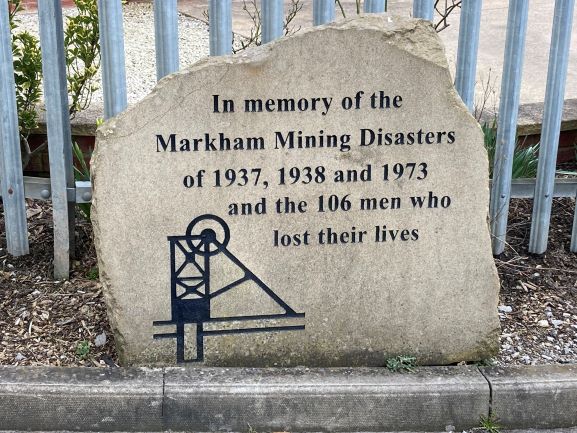
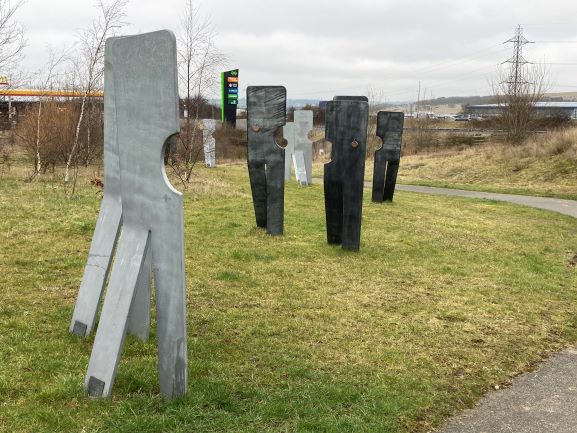
Memorial stone at Markham Vale.
Part of the ‘Walking Together’ mining memorial trail, commemorating the 1937, 1938 and 1973 Markham Colliery disasters.

The price of coal Read More »

Newbold (Chesterfield) draft text now available

Newbold features in our latest draft text, uploaded to our Derbyshire Victoria County History Trust website. You can find this here.

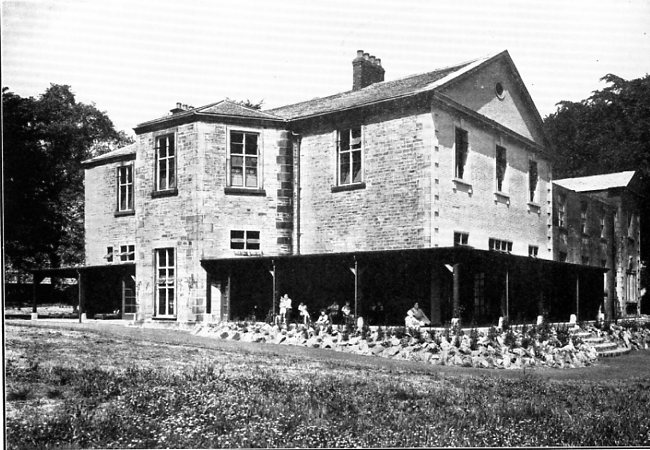
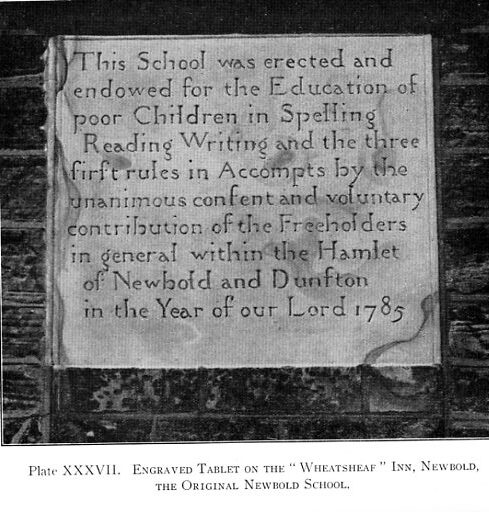
Our two photographs are taken from the 1932 ‘Chesterfield Education. A record of four years of experiment and reconstruction’ book. This was published by a justifiably proud Chesterfield Corporation following reorganisation of the town’s schools.

Highfield Hall, then recently converted into an infant and junior school, taken around 1932.

Highfield Hall, then recently converted into an infant and junior school, features in the first photograph. The second shows a plaque which was originally fixed to the old Wheatsheaf inn on Newbold Road. When this old building was pulled down and replaced by the more recent Wheatsheaf the plaque was taken inside. Fortunately, it still survives, outside the recently built Cooperative store which has itself replaced the newer Wheatsheaf.

You can find out much more about Highfield Hall (from page 34) and other properties and estates in our draft text, but our education section is yet to come. We welcome comments by contacting us.

Draft text is very much work in progress. It’s written by our county editor, following research by him and our volunteer group. You can find out more about how our draft parish history text is structured here.

Newbold (Chesterfield) draft text now available Read More »

Pilkington’s 1789 Chesterfield in a ‘very flourishing state’

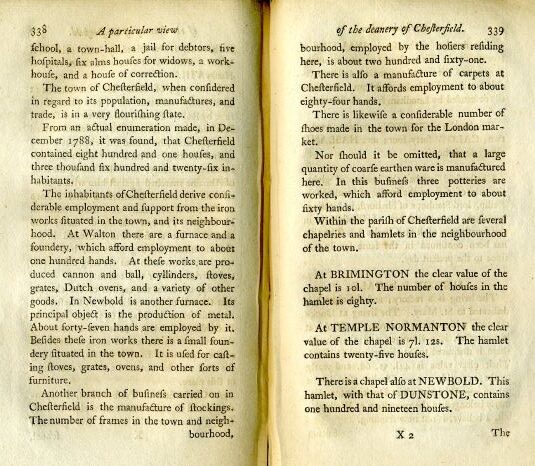
These two pages from the Chesterfield section of James Pilkington’s ‘View of the present state of Derbyshire’ published in 1789, reveal another side to the town’s industry. Along with the perhaps expected ‘course earthenware’, iron smelting and casting activities, Pilkington mentions ‘a considerable number of shoes [are] made in the town for the London market.’ He also found that about 84 hands were employed producing carpets. By far the greatest manufacturing trade was in stockings, which was employing about 251 people. Overall, he found Chesterfield in a ‘very flourishing state’.

We make extensive use of 19th and 20th century trade directories and other contemporary publications in our work towards a new account of local communities. These are an excellent source of information for such issues such as industry, local governance, social history and others.

James Pilkington’s two volume ‘View of the present state of Derbyshire’ is just one source we use in VCH. Volume one contains a general survey of the county, including its geography and topography, mines and ores, medicinal waters and baths (then a lot more important then than now) and natural history. The second volume includes a survey of deaneries in the county, from which the extract here is reproduced.

In normal times you can consult Pilkington in some Derbyshire local studies Libraries.

Our volunteer Chesterfield research group has been pleased to make use of the excellent resources built up over many years in the local history section of the library at Chesterfield.

Pilkington’s 1789 Chesterfield in a ‘very flourishing state’ Read More »

Get involved

If you are interested in supporting our work, you are very welcome to join us here at the Derbyshire Victoria County History Trust.

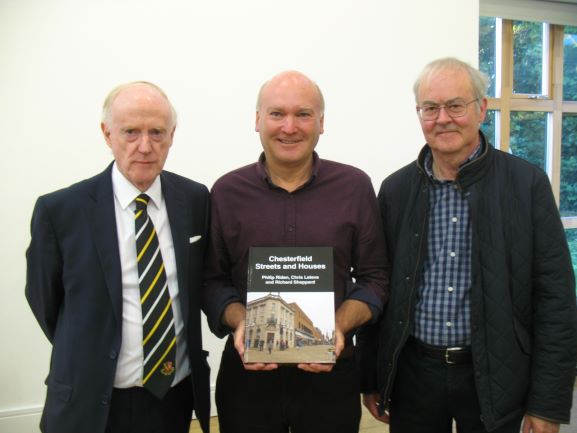
The launch of our ‘Chesterfield Streets and Houses’ book was accompanied by a short talk and refreshments. Everyone who was a member of the Derbyshire VCH Trust at the time received a free copy of this book. At the launch in 2019 are the authors (L-R) our County Editor Philip Riden, Chris Leteve and Richard Sheppard.

We are currently concentrating our efforts on the Chesterfield area, having undertaken research which has been published on Bolsover and adjoining parishes.

You can find out more information on our activities at our website and by contacting us.

In normal times we run a weekly term-time research group in Chesterfield, which brings together a small friendly group of interested people under our County Editor Philip Riden. We also hold summer guided walks and usually hold an AGM, with a speaker on some topic of interest to those interested in the county’s history. Members of VCH also receive a free copy of our publications (but not back copies) and a periodic newsletter.

Our blogs and Facebook posts give some indication about the sources we use and the research we have undertaken. Membership of VCH is available from £5 a month, which automatically enters you into our monthly prize-draw. We are a registered charity.

Get involved Read More »

Don’t overlook those old company magazines

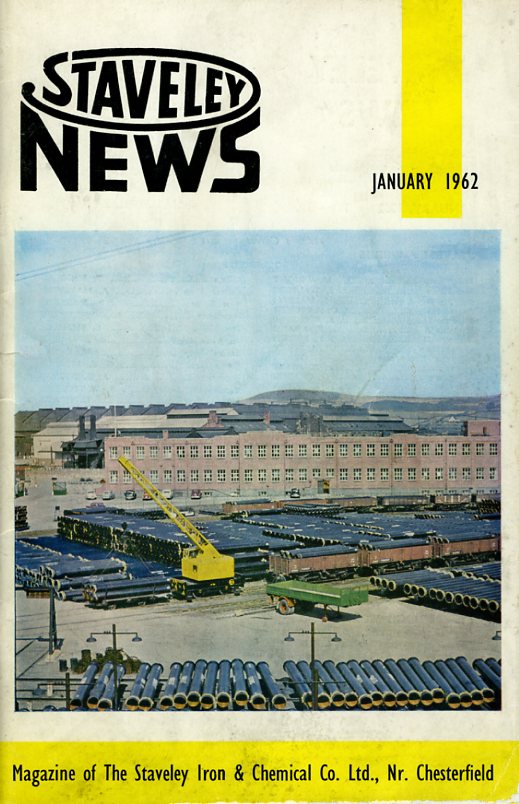
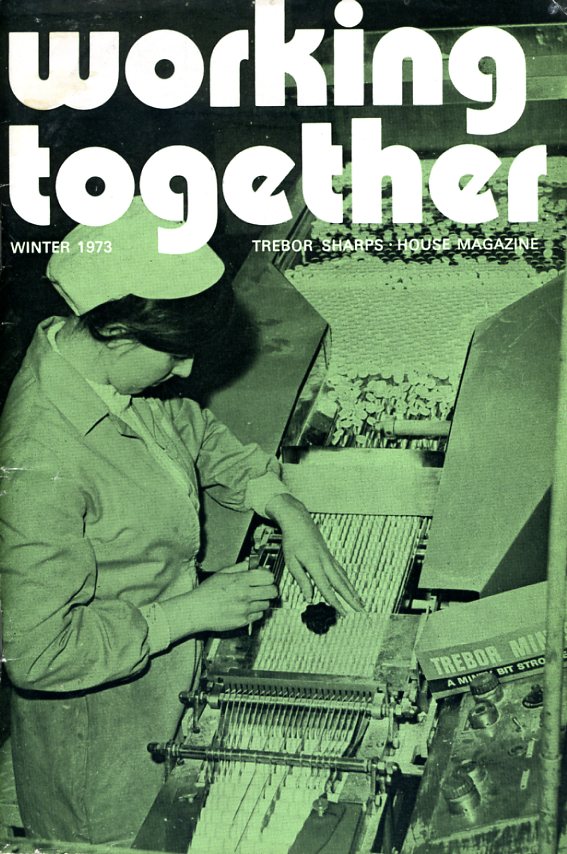
The Victoria County History makes use of a wide range of sources in our attempt at a new history of local communities. One of the forgotten aspects of Chesterfield’s claim to be the ‘Centre of Industrial England’ was the amount of in-house magazines produced by locally based companies for their employees. They can make an excellent source for both local, company and family history. Many are available in local studies libraries.

We feature just a few examples on this page. Our first is the front cover of January 1962’s Staveley News. Produced by the Staveley Iron & Chemical Company, the cover shows ‘…one of Staveley’s stockyards has as a background the neat block which houses Foundries laboratories and offices and the research department. Just behind are the roofs of foundry buildings…’

The second is Trebor Sharps’ Working Together, from Winter 1973. The front cover features Chesterfield’s ‘Maeve McGoaty at the hopper that feeds the wrap machine wrapping Trebor mints.’ In addition to the Chesterfield facility, at this time the Trebor group had factories at Woodford, Forest Gate, Maidstone and Stratford, their own printers (who printed the magazine) and overseas distributers. Their magazine covered all these locations.

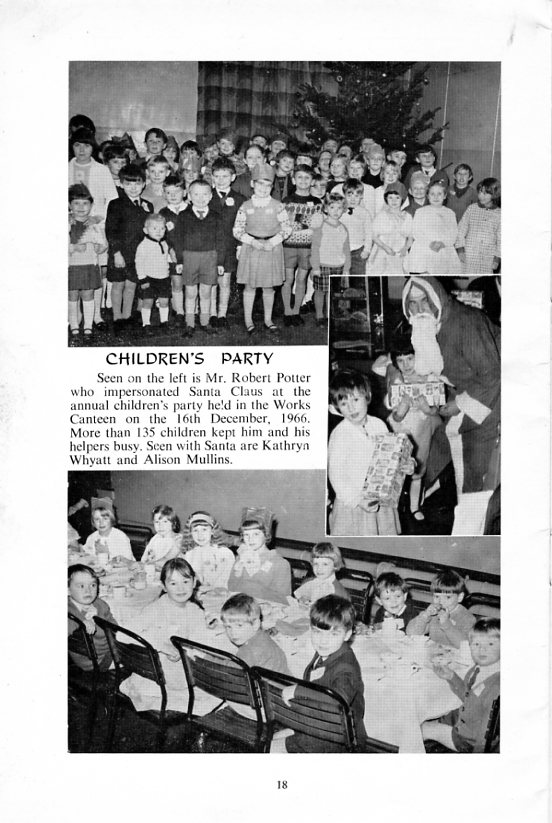
The spring 1967 edition of Broad Oaks magazine (from Markham & Co., Chesterfield), featured the previous December’s Christmas party, an annual feature at many companies.

Broad Oaks was the magazine of the Markham & Co. Ltd., named after their engineering works at the bottom of Hady Hill. Like most other company magazines, it not only featured latest corporate news, but also such things like social events, sports and employee news. Our third extract is from the magazine of spring 1967. It’s a page showing the children’s Christmas party – an annual event at many companies during the period. We wouldn’t use this type of information in VCH, but it does seek to outline the ‘other things’ lost that the closure of large employers in the Chesterfield area and elsewhere has resulted in. Also lost were numerous sports-grounds and welfare facilities. The Staveley company and GKN were particularly noteworthy examples in the Chesterfield area of facilities that are no more.

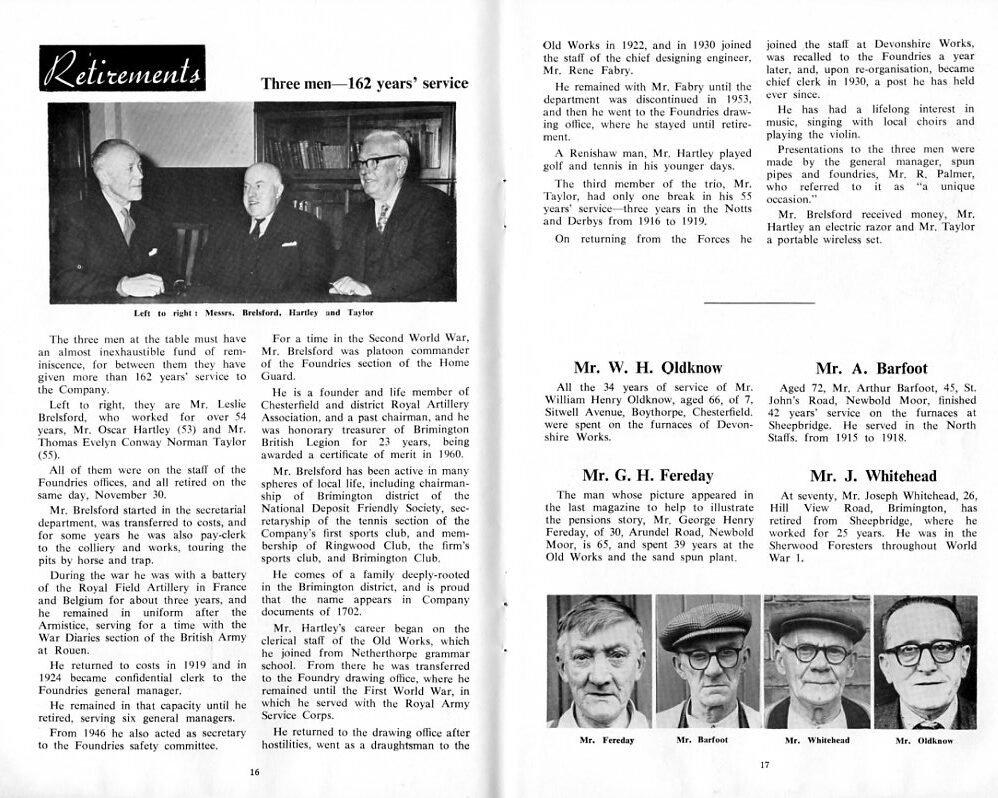
In-house employee magazines can be an excellent source for tracing the development of local companies. For the family historian, many also contain photographs and other information on long-serving employees, even marriages and deaths. Take our final scan from the same January 1962 Staveley News. It features the retirement of three employees. One wonders if this photograph or the information in the article has survived or is available anywhere else?

January 1962’s Staveley News was not unusual in marking the retirement of long-serving employees. Leslie Brelsford, one of those featured here, was from a well-known Brimington family and went on to write a history of the Royal British Legion in Brimington.

Don’t overlook those old company magazines Read More »

Bolsover baths

We are still at Bolsover for this blog – and is anyone up for a swim? Unfortunately, if you are – you’re too late, for these baths were closed, controversially, in the late 1980s and demolished.

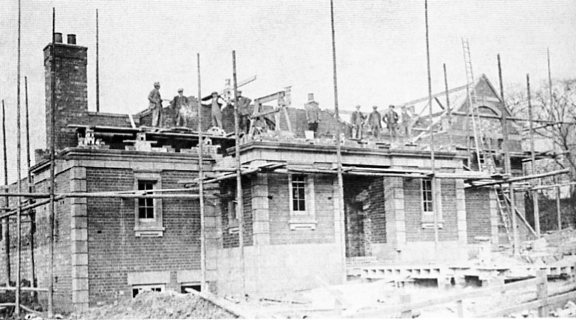
Bolsover Baths was built complete with a house for the superintendent. The facility is seen under construction in 1925.

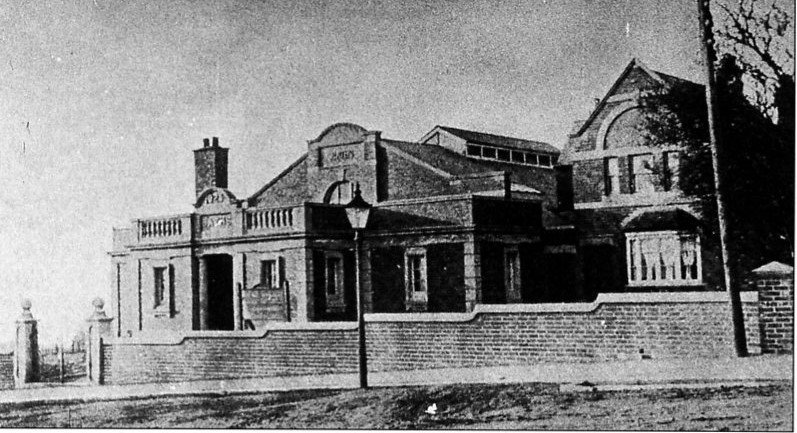
They were opened in 1925 on land given to the miner’s welfare committee fund by the duke of Portland, at the bottom of Castle Lane. Not only were there public baths, but the scheme also included public slipper baths (where, for those who had no bathroom, you could go and get one) and showers. The baths (there was one pool) could be boarded over for dances, concerts and meetings.

Our first photograph shows the baths, including the superintendent’s house, under construction. Our second the completed baths, both are courtesy of Bernard Haigh and featured in his ‘Around Bolsover’ book. The baths were certainly impressive.  As recorded in our book ‘Bolsover: castle, town and colliery’ the town’s urban district council took a 25-year lease on the baths in 1925, at a nominal sum.

They were used by local people and those from further afield – particularly schools, who would be transported by the town’s Castle Coaches to and from the baths. (The writer of this post remembers being ferried from a Chesterfield area junior school to Bolsover and back in the late 1960s by Bolsover’s own Castle Coaches).

The interwar period was one of progress by Bolsover’s urban district council. They constructed council homes, provided improved parks, purchased the formerly private water undertaking (1923) and began to supply electricity (from 1927). A library was also established in the council offices, jointly with the county council, in 1925, before moving to a former Co-op branch in 1932, on Cotton Street.

The completed Bolsover Baths in 1925. They were controversially demolished in the 1980s.

Bolsover baths Read More »

England’s Past for Everyone 2008 launch at Bolsover remembered

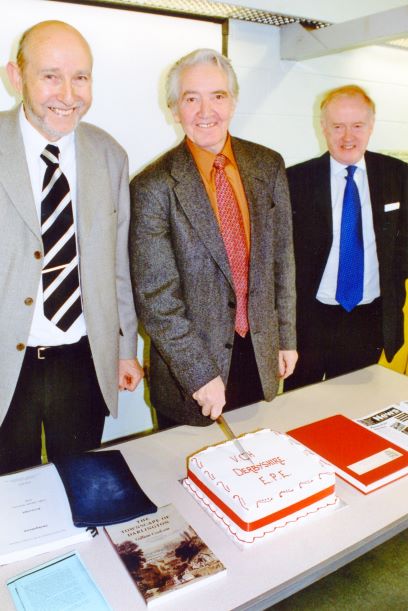
We’ve dipped in to our own archives for this blog, with pictures of when our part of the England’s Past for Everyone (EPE) project was launched in Bolsover Library on 18 March 2006.

Dennis Skinner, then Bolsover’s MP, with the co-authors of the two EPE books produced as part of the project – Dudley Fowkes (left) and Philip Riden (right).

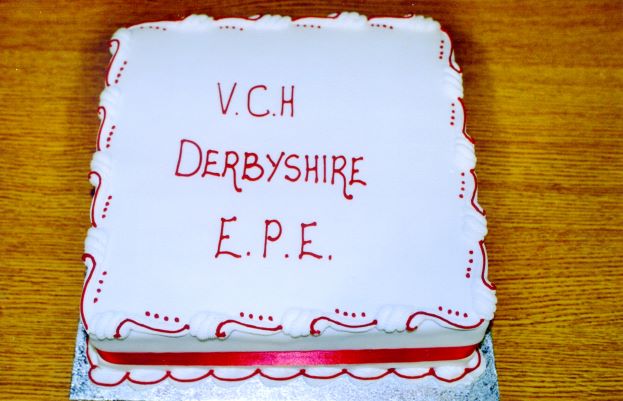
We were able to welcome Dennis Skinner, then Bolsover MP, who cut our rather tasty birthday cake. Professor David Hey (who sadly died in 2016) and Professor John Beckett from the University of Nottingham and one-time Victoria County History (VCH) national director were also present along with civic and local history organisations in the Derbyshire project areas (which were Bolsover and Hardwick). Professor Hey was a chairman of the Derbyshire Victoria County History Trust.

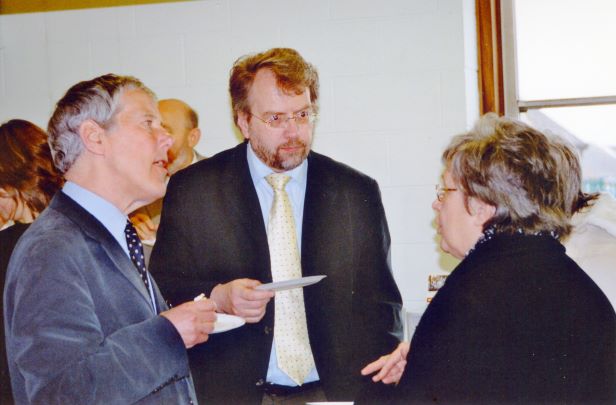
The much-missed Professor David Hey (right) is with Professor John Beckett (centre), talking to a member of one of the civic and local history societies invited to the project launch

The EPE project was driven by the internationally respected research standards of VCH. In addition to the two books on Bolsover and Hardwick which were eventually produced, a website was created. This is still accessible at https://www.victoriacountyhistory.ac.uk/explore/. The project included work with schools. A volunteer research group was started and contributed to the work. Other communities across England were also part of the EPE project.

Find out more about the Derbyshire EPE books on Bolsover and Hardwick (which are unfortunately now out of print) and other VCH publications here.

Our locally baked ‘birthday’ cake

England’s Past for Everyone 2008 launch at Bolsover remembered Read More »

Our approach to digital media

It’s only fairly recently that we have been managing our own digital media presence. Both our own webpage and Facebook page are newcomers.

We have had a blog published by the British Association for Local History (BALH), about this recent approach to digital media, including Facebook posts. Take a look at https://www.balh.org.uk/blog-opening-up-our-research-to…

The BALH has lots of information on its website (https://www.balh.org.uk/) for anyone interested in local history and runs a popular series of on-line talks and seminars.

Our approach to digital media Read More »

TP Wood’s Chesterfield and North Derbyshire Almanac

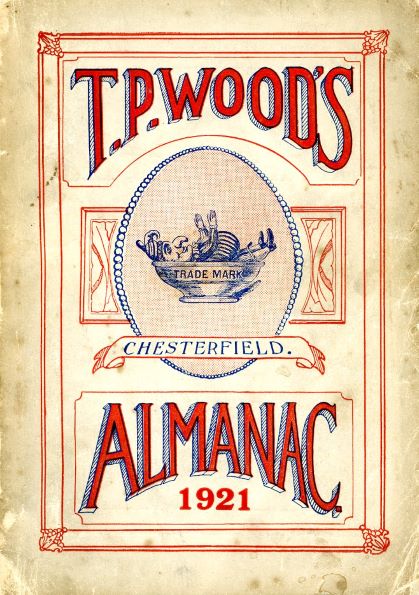
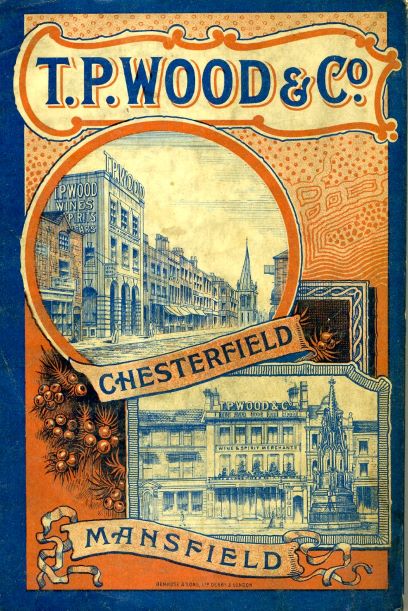
Local wine and spirit merchant Thomas Philpot Wood (1840-1911) published an annual almanac from his premises over-looking Chesterfield Market Place. Our first illustration shows the once familiar cover of one the later editions. The second illustration is taken from the rear cover of his edition for 1900, which clearly shows TP Wood’s premises. The almanac was distributed freely to his ‘customers and friends’.

A familiar cover design, which last appeared basically unaltered the last almanac for 1964, published at the end of 1963.

The first edition was published in 1863 with the final one in 1963 (for 1964), though by this time the business had long been part of the Mansfield Brewery Company. There were notable gaps in publication, including just before the First World War and after the Second World War.

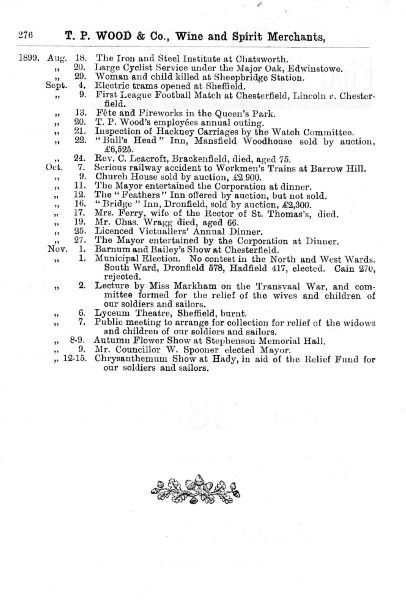
In its early years, Wood would introduce each almanac with his personal thoughts about local and national happenings. There were general articles, a local directory and perhaps, most famously of all, a chronicle in which local events were briefly listed. Our third photograph shows the final entries for the 1900 almanac. They generally end in November of each year to allow for typesetting and subsequent publication around Christmas. The almanac for 1900 was therefore published in the period leading up to Christmas 1899. It comprised some 515 pages – quite an undertaking. They were eagerly awaited in many households.

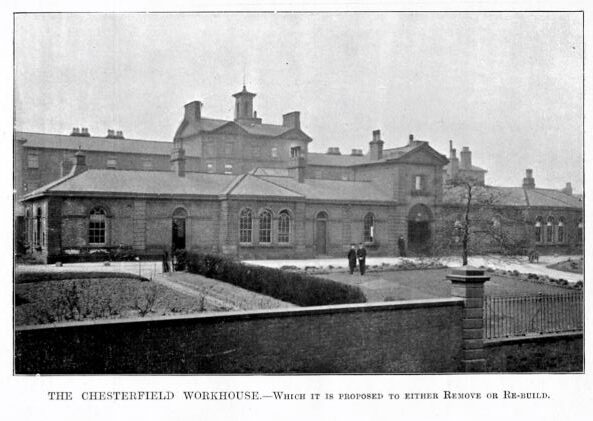
The almanacs might also be illustrated with plates of local features, such as the workhouse on Newbold Road (later Scarsdale Hospital) – our final photo. Wood explains in his introduction that rebuilding or a move out of town was then under discussion. In the event the former was pursued.

The covers of the almanac changed little in its later years. Our first photograph shows one from 1921, which includes the TP Wood’s punch (in a) bowl trademark. The cover of the last edition for 1964 was basically the same, but with a dark blue paper.

TP Wood himself was a great benefactor to the town and prominent in its politics. Today he is best remembered as the driving force behind Chesterfield’s Queen’s Park and his almanac. You can find out more about him at this short biography by Chesterfield Museum.

There’s an interesting blog from the Derbyshire Record Office about how an engraving of Chapman’s 1837 map appeared in one of TP Wood’s almanacs here.

For us in Derbyshire VCH, we still use TP Wood’s almanacs as a useful research source – particularly its chronicle of local events.

TP Wood’s Chesterfield and North Derbyshire Almanac Read More »

The Angel Hotel, Market Place, Chesterfield

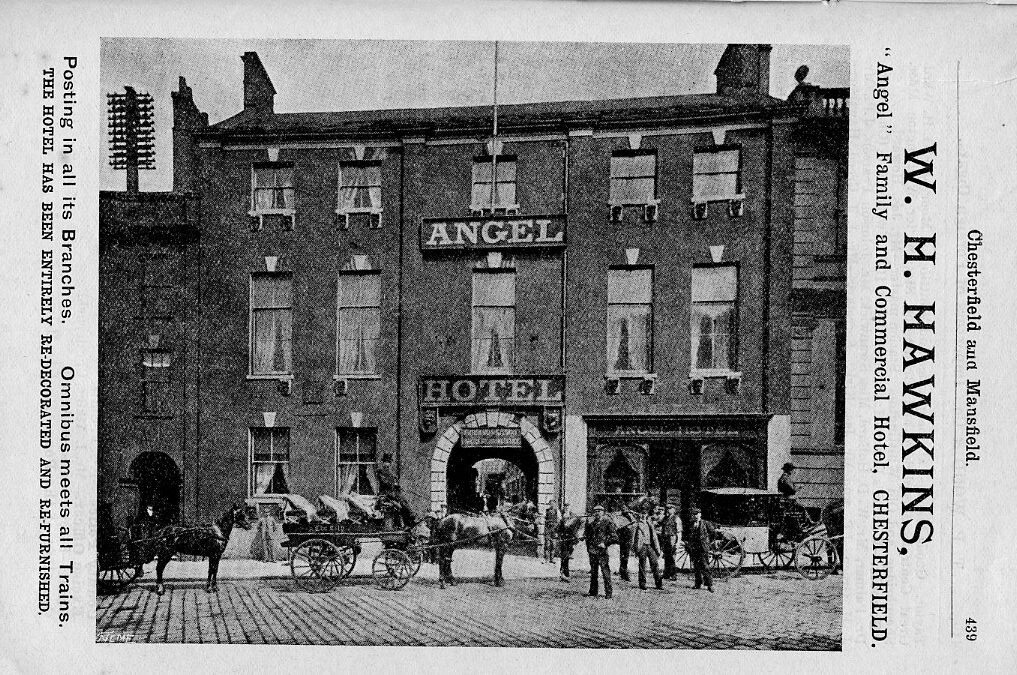
We are returning to Angel Yard, more particularly the Angel Hotel, for this post. Our illustration here is an advertisement taken from TP Wood’s Almanac for 1900. It shows the hotel sandwiched between the National Westminster Bank and the former post office – all opposite the Market Hall. The entrance to Angel Yard is through the central archway.

The Angel Hotel, Chesterfield Market Place. An advertisement from TP Wood’s Almanac for 1900.

John Hirst’s ‘Chesterfield Pubs’ (2005) tells the later story of the hotel, which, by the mid-19th century, had become one of the best in Chesterfield. He cites an 1890 commercial guide to Chesterfield which gives details of the accommodation – 20 bedrooms, billiard room with three tables, coffee room, dining room and commercial room. The ‘Oak Room’ was said to the finest dining and ballroom in the county. Of 60ft by 30ft it could seat 120 people. Stabling was available for 80 horses.

Our own ‘Chesterfield Streets and Houses’ book explains that the Angel Hotel took the name of an inn further east along High Street. This was possibly while other name changes for inns were taking place in the area in the 1790s. Until that time the Angel was called the Castle Inn. We also push the story back a little further – earlier into the 17th century – as we believe that the site was once owned by the one-time influential Clarke family.

In the early 1780s John Saxton was the landlord and also the Chesterfield postmaster. The Newcastle, Birmingham, Bristol and Bath coaches all called there. The coming of the railways from the 1840s reduced The Angel’s importance as a coating inn, but it was still regularly used for assemblies, auctions and stabling. It was, itself, sold in 1876 for £11,300 – a considerable sum at the time.

By the late 19th century, the Angel was owned by Sheffield brewers Wm. Stones Ltd. But, the Angel’s days were unfortunately numbered. Stones owned the nearby Hotel Portland, with its more modern accommodation. In 1915, deeming that the Angel was surplus to requirements, Wm Stones gave up the hotel’s licence. The Angel Vaults was, however, retained. This comprised two rooms, used as a public bar (on the right-hand side of the photograph), until 1920 when the licence was transferred to a new Angel Hotel on Derby Road (now Tesco).

Since 1915 the hotel had been used as a British Red Cross waste paper depot. A dramatic fire, on an icy February 1917 night, seriously damaged the hotel building, with water from the fire-fighting inundating the Vaults.

John Hirst states that the building was finally cleared in 1926 with an extension to the Westminster Bank and former Post Office covering most of the site. A small gap marks Angel Yard – the subject of our post of 21 February 2021.

There’s a good account of 17th century coaching inns in the town (including the Angel) in Rosemary Milward’s 1980 article in the Derbyshire Miscellany (pages 31-7), although by a slip of the pen, on page 31, the Angel is placed on the south side of the Market Place. You can read this free by following this link.

https://www.derbyshireas.org.uk/DM09-01.pdf

The Angel Hotel, Market Place, Chesterfield Read More »